
Jewel of the Ear
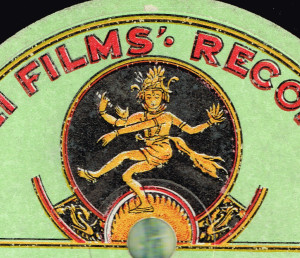
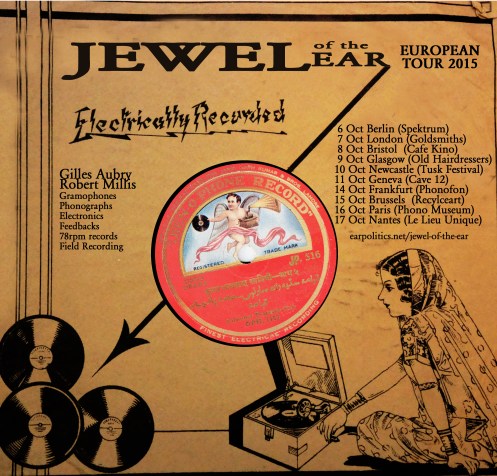
Jewel of the Ear is a collaborative research and performance project with sound artist Gilles Aubry. Originally commissioned by Deutschland Radio for the Art’s Birthday Festival 2015 in Berlin, and supported through residency and research grants from Pro Helvetia. The final outcome was an audio essay for radio commissioned by Documenta14 in 2017 called The Gramophone Effect.
Here’s a link: The Gramophone Effect. Or HERE.
“Jewel of the ear” is the English translation of Manikarnika, the Hindi name of the most important funeral temple in the city of Varanasi in India. Located next to the holy Ganga river, this temple is the main site of Hindu religious body cremations, following a precise symbolic ritual based on cosmic renewal. Hindu religion posits the necessity of the material destruction of the body for the perpetuation of the cosmic cycle of life. Thus, cremation becomes synonymous with creation.
As a product of the late 19th century Western Christian society, the technology of audio-recording is instead strongly rooted in ideas about the material fixation of sound for the purpose of preservation after death. Beside actual recordings of body cremations, early Indian 78 rpm records provide another opportunity to reflect on death and preservation. Audio-recording technology was introduced in India at the beginning of the 20th century (1902) by the British occupiers in order to establish new markets for the growing record industry, which was dominated by competing European and American companies. Much of the early music recorded in India is religious and concerns various spiritual functions including funerary practices.
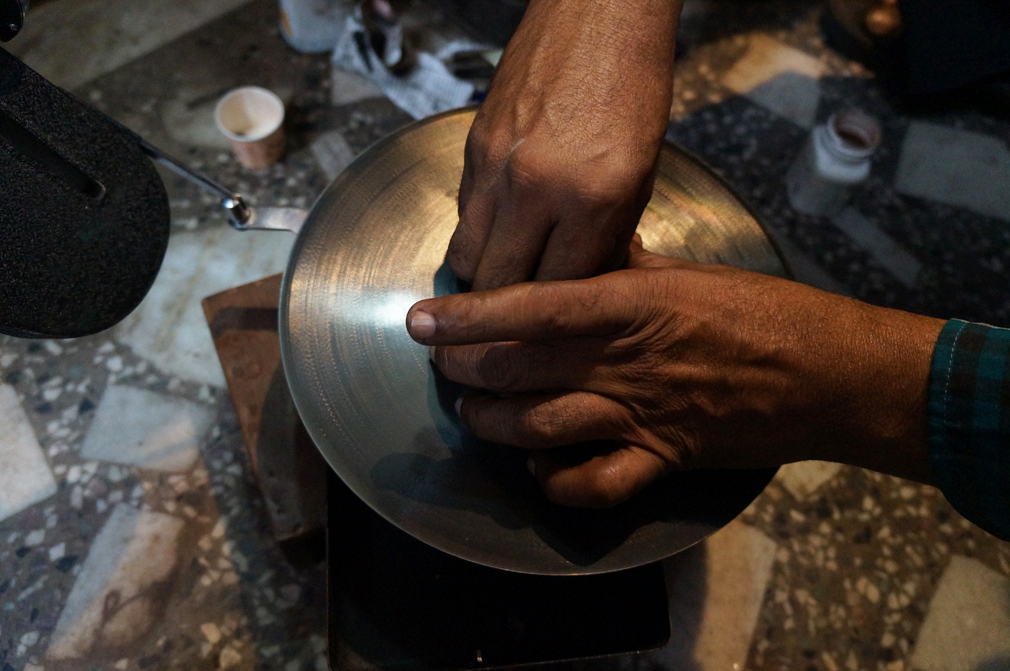
Aubry & Millis have engaged in this reflection by creating a performance with sounds from their respective archives, mixing fires, voices and atmospheres from the Manikarnika temple together with selected early Indian 78 rpm records (c.1902-1930) including sacred & funeral music, colonial and Indian national speeches, as well as curiosities such as stand-up comedies and imitations. The abstract surface noise is characteristic for the 78 rpm records, especially when played on old wind-up Gramophones and Victrolas. Combined with other recording media (digital and tape), these audible differences serve as a composition principle, simultaneously allowing for a renewed cultural interpretation of the various dimensions of recording practices.
further documentation:
The Radio Artist as Ethnographer: Sound and Postcolonial Knowledge in The Gramophone Effect (Anna Vermeulen, 2020)
The Gramophone Effect on Radiophonic Space Mindmap
 Robert Millis